
Cannondale Lefty Bike: Revolutionizing Off-Road Cycling with Innovative Suspension
In the world of cycling, few innovations have sparked as much curiosity and admiration as the Cannondale Lefty Bike. This unique design, featuring a single-sided suspension fork, has become synonymous with cutting-edge engineering and superior performance on rugged terrains. Whether you’re a seasoned mountain biker tackling cross-country trails or a gravel enthusiast exploring backroads, the Cannondale Lefty Bike offers a blend of lightness, stiffness, and smoothness that sets it apart from traditional setups. In this comprehensive guide, we’ll dive deep into what makes the Cannondale Lefty Bike a game-changer, exploring its history, features, popular models, advantages, and more. If you’re considering upgrading your ride or simply curious about this iconic system, read on to discover why the Cannondale Lefty Bike continues to captivate cyclists worldwide.
The Fascinating History of the Cannondale Lefty Fork
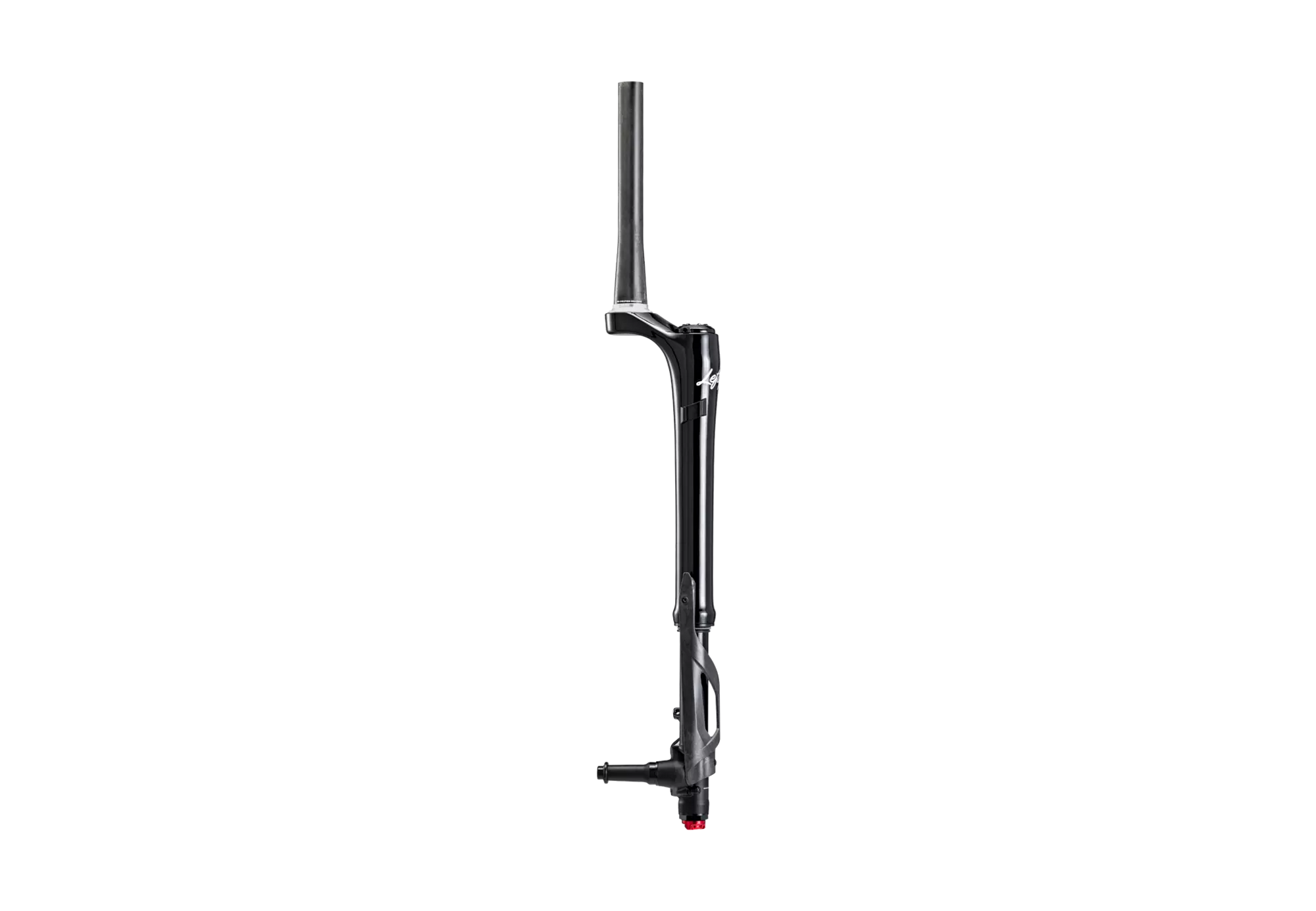
The story of the Cannondale Lefty Bike begins with Cannondale’s relentless pursuit of innovation in bicycle suspension. The Lefty fork’s origins trace back to the early 1990s, evolving from Cannondale’s Headshok suspension system introduced in 1992. This initial design featured needle bearings for smooth travel, laying the groundwork for what would become the Lefty. A pivotal moment came in 1994 when engineers toyed with a “crazy idea” for a single-sided fork prototype. After extensive trail testing, the first Lefty was officially introduced in the late 1990s, starting with models like the Moto FR in 1998, which offered 100mm of travel by essentially combining two Headshok units.
Over the years, the Lefty has undergone significant refinements. By 2010, it was still a misunderstood marvel, but Cannondale’s commitment to needle-bearing technology and upside-down design solidified its reputation for reduced friction and enhanced rigidity. In 2015, the Lefty Oliver marked a milestone as the first production suspension fork tailored for gravel biking, debuting on the Slate model. Fast forward to today, and the Lefty Ocho represents the pinnacle of this evolution, blending lightweight construction with advanced damping for cross-country and gravel applications. This history underscores Cannondale’s philosophy: challenge conventions to create bikes that perform better, like the Cannondale Lefty Bike, which has influenced everything from XC racing to adventurous bikepacking.
The Lefty’s development wasn’t without challenges. Early models faced skepticism due to their unconventional appearance, but riders quickly appreciated the weight savings and performance gains. As one industry expert noted, the Lefty’s persistence proves its engineering prowess—Cannondale made it rigid enough to outperform dual-leg forks while shedding unnecessary weight. From wooden prototypes to carbon-fiber wonders, the Cannondale Lefty Bike embodies decades of trial, error, and triumph in cycling technology.
Key Features and Technology Behind the Cannondale Lefty Bike
At the heart of every Cannondale Lefty Bike is the Lefty fork’s groundbreaking technology. Unlike traditional forks with two legs, the Lefty uses a single-leg design that incorporates a trio of needle-bearing sets. This setup eliminates bushings, allowing for friction-free movement and preventing internal rotation or play. The result? Ultra-smooth travel that feels plush on small bumps while maintaining stiffness for precise handling.
One standout feature is the Chamber Damper, a self-bleeding system with high-flow capacity and speed-sensitive valving. It includes heat compensation to keep performance consistent even during intense rides, preventing oil from boiling and ensuring spike-free damping. External adjustments for compression and rebound make tuning straightforward, appealing to both casual riders and pros. The Lefty Ocho, for instance, offers 100mm of travel (tunable to 110-120mm in some variants), engineered for balanced stiffness across three planes—perfect for acceleration, climbs, and descents.
Weight is another key advantage; the Lefty Ocho Carbon weighs around 1,446 grams, rivaling the lightest XC forks while providing trail-fork-like rigidity. This stiffness-to-weight ratio enhances traction, control, and energy efficiency, making the Cannondale Lefty Bike ideal for competitive racing or long adventures. Additional perks include easy tire changes without wheel removal, thanks to the open design.

In terms of durability, the needle bearings are built to last, with a simple 50-hour reset procedure to reposition them for even wear. Overall, the technology in a Cannondale Lefty Bike prioritizes real-world performance, turning rough trails into smooth rides without compromising speed or agility.
Exploring Popular Cannondale Lefty Bike Models
Cannondale integrates the Lefty fork into various models, each tailored to specific riding styles. Let’s break down two flagship examples: the Topstone Carbon 2 Lefty for gravel enthusiasts and the Scalpel 2 Lefty for XC racers.
Cannondale Topstone Carbon 2 Lefty: The Gravel Conqueror
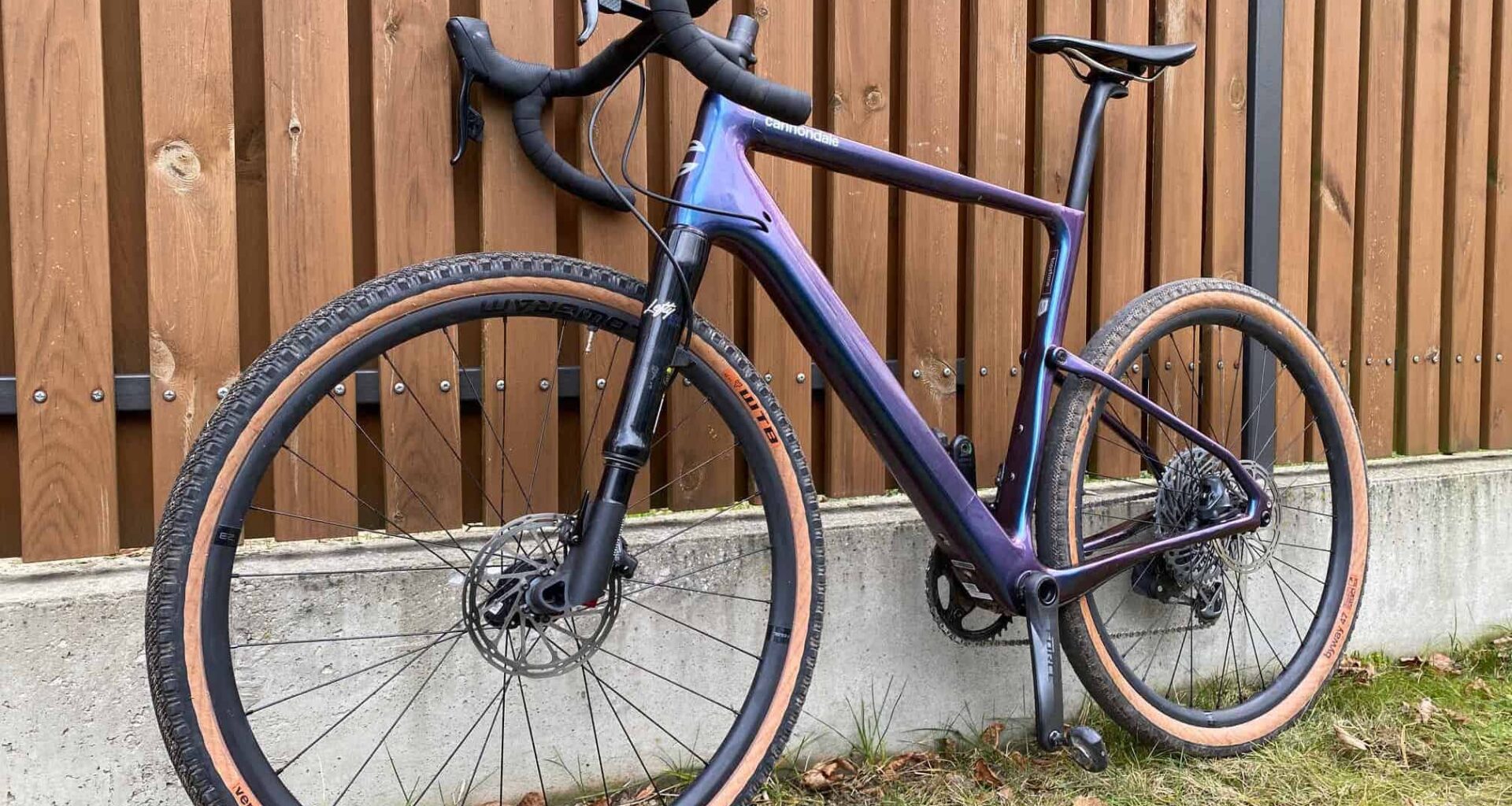
The Cannondale Lefty Bike shines in gravel with the Topstone Carbon 2 Lefty. This model boasts a lightweight carbon frame equipped with the Kingpin suspension system, delivering 30mm of rear travel for superior comfort on bumpy roads. Paired with the Lefty Oliver fork (also 30mm travel), it features a Chamber Damper with All-Over tune and an ISO High-Ride air spring, accommodating up to 700x45mm tires for versatile terrain handling.
Components include a Shimano GRX 800/600 12-speed groupset for reliable shifting, hydraulic disc brakes for confident stopping, and DT Swiss G540 tubeless-ready wheels with Vittoria Mezcal tires. Practical features like multiple gear and bottle mounts, OutFront steering geometry, and a DownLow dropper post make it perfect for bikepacking and off-road exploration. Riders praise its ability to tackle dirt roads, rough pavement, and singletrack, blending speed with endurance.
Cannondale Scalpel 2 Lefty: The XC Racing Machine
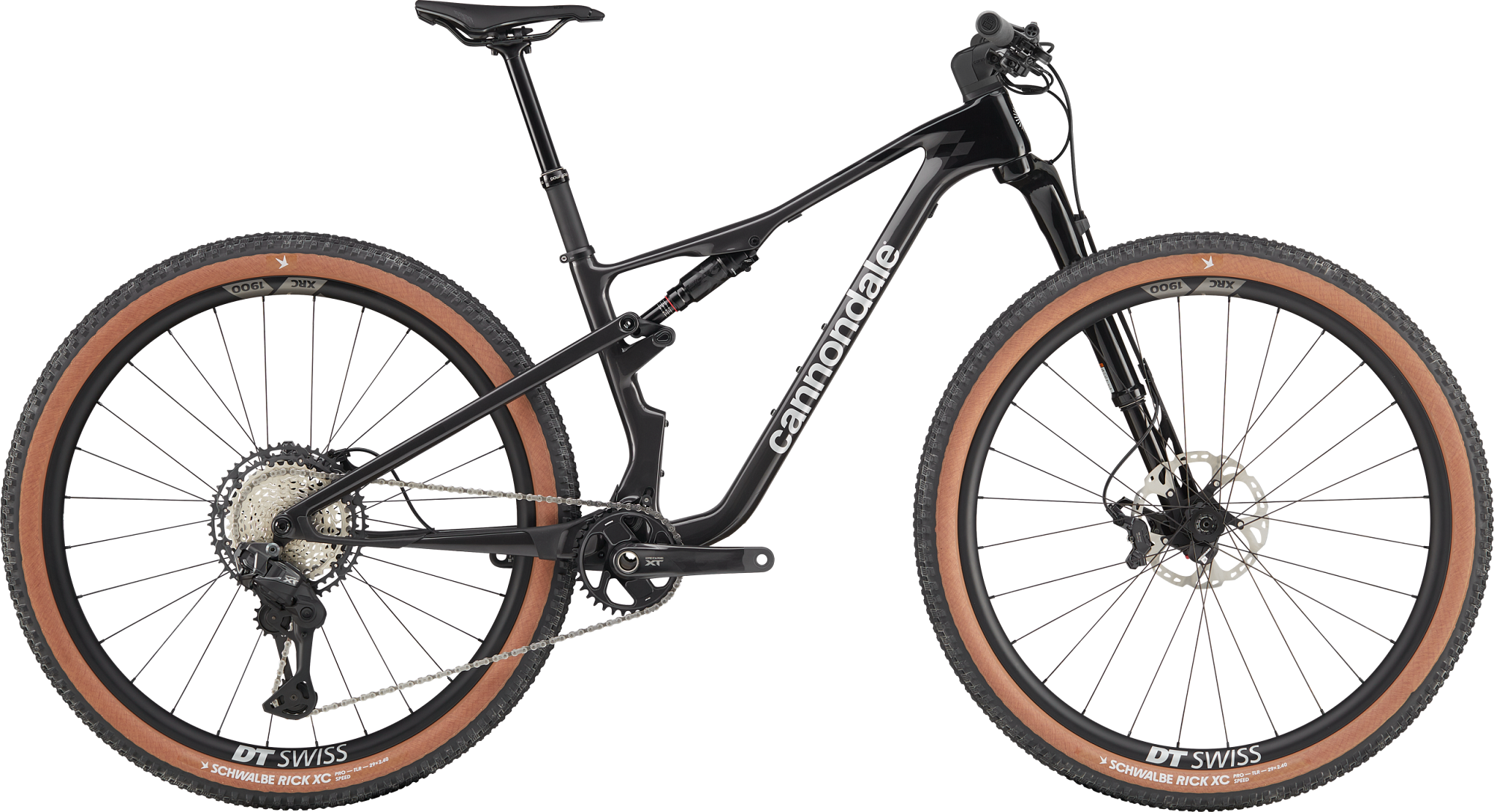
For those seeking pure speed, the Scalpel 2 Lefty exemplifies the Cannondale Lefty Bike in cross-country form. Its carbon frame offers 120mm of travel with Proportional Response Suspension and FlexPivot Chainstay for optimized kinematics. The Lefty Ocho Alloy 120 fork, with OppO Spring System and TwistLoc remote lockout, ensures smoothness and responsiveness.
The drivetrain features SRAM GX Eagle AXS 12-speed components, while SRAM Level Silver brakes and Cannondale HollowGram XC-S carbon wheels provide lightweight stopping power and traction via Maxxis tires. Geometry like a 66.6° head tube angle promotes stability and control, ideal for World Cup XC or marathon racing. This Cannondale Lefty Bike targets thrill-seekers who crave traction on climbs and confidence on descents.
These models highlight how the Cannondale Lefty Bike adapts to diverse needs, from gravel grinding to intense racing.
Pros and Cons of Owning a Cannondale Lefty Bike
Like any specialized gear, the Cannondale Lefty Bike has its strengths and drawbacks.
Advantages
- Superior Rigidity and Suppleness: The design reduces stiction for better control in rough terrain, braking, and cornering.
- Lightweight Efficiency: Competitive weight aids in acceleration and energy conservation.
- Convenient Maintenance: Easy tire access without wheel removal speeds up repairs.
- Enhanced Traction: Plush travel keeps tires glued to the ground for technical sections.
Riders often report feeling more confident on descents, with the fork’s sensitivity making it a top choice for aggressive XC.
Disadvantages
- Proprietary Parts: Special hubs limit wheel options, potentially increasing costs.
- Service Requirements: Needs authorized dealers for repairs due to unique tools.
- Extra Steps for Wheel Removal: Brake caliper adjustments add a minor hassle.
Overall, the pros outweigh the cons for dedicated off-roaders, as the Cannondale Lefty Bike delivers unmatched performance.
Maintenance Tips for Your Cannondale Lefty Bike
Keeping your Cannondale Lefty Bike in top shape ensures longevity. Perform the 50-hour bearing reset to maintain even wear—it’s a simple process involving rotating the fork upside down. Regularly check air pressure in the fork and clean the stanchions to prevent dirt buildup. For damping, use external dials to fine-tune based on terrain. Professional servicing every 100-200 hours is recommended, especially for damper rebuilds. Always use compatible parts to avoid compatibility issues with the proprietary hub.

Why Choose a Cannondale Lefty Bike?
If you’re after a bike that pushes boundaries, the Cannondale Lefty Bike stands out for its innovation and versatility. It’s not just about the looks—though the single-leg design turns heads—it’s the tangible benefits in ride quality that win over converts. From gravel explorers to XC competitors, this system enhances every pedal stroke. With models like the Topstone and Scalpel, there’s a Cannondale Lefty Bike for various budgets and styles.
In conclusion, the Cannondale Lefty Bike represents the future of cycling suspension: lighter, stiffer, and smoother. Whether you’re new to off-road riding or a veteran, investing in one could transform your adventures. Explore Cannondale’s lineup today and experience the difference for yourself.